

Blog
This blog is intended for general informational purposes only and does not constitute legal advice. It is based on USCIS policy guidance, Immigration petitions and applications adjudication data, and practitioner observations regarding current adjudication trends. Readers should consult qualified immigration counsel regarding their specific circumstances.

Wisconsin's H-2A Problem: Immigration Law Is Falling Behind Economic Reality
By Attorney Lucy Lu May 21, 2026
The H-2A visa program is the main legal tool available to agricultural employers who need to hire foreign workers in Wisconsin. In theory, it exists to solve exactly the labor shortage problem Wisconsin farms are facing. In practice, it was designed for a different era — and a different kind of agriculture — than what Wisconsin actually runs on today.
Why the H-2A program often doesn't work here
The core issue is that H-2A was built around "temporary or seasonal" labor. For example, that framing fits a fruit-picking operation that runs from April through September. It doesn't fit a 300-cow dairy farm that needs the same reliable workers showing up at 5 a.m. every morning, twelve months a year.
Beyond the eligibility question, the process itself creates barriers that are genuinely hard for smaller employers to navigate. To bring in H-2A workers, an employer must complete prevailing wage determinations, file temporary labor certifications, prove they've recruited domestically first, arrange compliant housing, cover round-trip transportation costs, and coordinate approvals across multiple federal agencies. On a good day, that process takes 60 to 90 days. On a typical day, it takes longer — which means workers who were supposed to arrive in April are sometimes showing up in June, after the critical planting window has already closed.
For a large corporate operation with a compliance team, this is manageable. For a family-owned farm in Fond du Lac or Green County, it can feel impossible — and expensive. Before a single hour of work happens, per-worker costs can run $5,000 or more when you factor in legal fees, transportation, and housing.
It's not just a farm problem
What often gets missed in the immigration debate is how far the labor shortage extends. Wisconsin's farms don't operate in isolation. Cheese plants, food processing facilities, cold-storage warehouses, agricultural equipment suppliers, and rural construction contractors are all competing for workers from the same shrinking local pool. And most of those industries — food processing, manufacturing, and construction, fall entirely outside the H-2A framework. There's no comparable visa program for them at all.
Employers across rural Wisconsin describe the same situation: they've raised wages, they've posted jobs repeatedly, and they still can't consistently find enough workers for physically demanding roles. This isn't a temporary blip. It's a structural reality driven by an aging rural population, younger workers leaving smaller communities, and an immigration system that hasn't kept up.
What would actually help
There's meaningful legislation in Congress worth paying attention to — the Farm Workforce Modernization Act has gained bipartisan traction and includes real improvements to H-2A processing and a new pathway for established farmworkers to earn legal status. It's not a complete solution for Wisconsin's year-round dairy needs, but it's a significant step in the right direction.
Beyond that, the reforms that would make the most practical difference for Wisconsin employers are straightforward: clearer eligibility rules for year-round agricultural work, faster and more predictable processing timelines, simplified compliance requirements for smaller operators, and some form of temporary work authorization for the construction and food processing sectors that are just as desperate for workers but have no legal pathway available to them today.
None of this requires abandoning a thoughtful approach to immigration law. It just requires updating that law to reflect how Wisconsin's economy actually operates in 2026 — not how it looked in 1986.
What does this means for Wisconsin employers right now
Wisconsin employers are increasingly forced to navigate workforce shortages using immigration systems that were never designed for the realities of modern rural economies. Until meaningful reform occurs, many businesses will continue relying on piecemeal legal strategies and temporary workarounds simply to maintain operations.
If you're running a dairy operation, a food plant, or a construction business in Wisconsin and you've been told that the H-2A program isn't an option for you — it's worth getting a second look. The rules are complex, and there are situations where employers qualify in ways they didn't expect. There are also other visa categories and workforce strategies that may be worth exploring depending on your specific situation.
NIW Trends: Increased Scrutiny, Higher Standards, and What Applicants Need to Know
By Attorney Lu, 5/6/2026
The EB-2 National Interest Waiver (NIW) remains one of the most powerful pathways to U.S. permanent residence for professionals who can demonstrate that their work serves the national interest — without the need for employer sponsorship or a PERM labor certification. But the
landscape has shifted meaningfully in recent years. Adjudication trends indicate a clear directional change: standards are tightening, expectations are rising, and outcomes are becoming less predictable. For applicants and practitioners alike, success increasingly depends not just on qualifications — but on strategy, positioning, and evidence of real-world impact.
The Framework Has Not Changed — But How It Is Applied Has
NIW petitions are adjudicated under the three-prong framework established in Matter of Dhanasar, 26 I&N Dec. 884 (AAO 2016), which requires applicants to demonstrate:
That the proposed endeavor is of substantial merit and national importance;
That the applicant is well positioned to advance the proposed endeavor; and
That, on balance, it would be beneficial to the United States to waive the job offer and labor certification requirement.
While this framework remains unchanged, recent adjudication patterns reflect a more rigorous application of each prong. General claims of professional importance or competence are no longer sufficient. USCIS increasingly expects clear, specific, and well-supported evidence addressing each element of the analysis.
Where NIW Cases Are Facing Greater Scrutiny
1. National Importance Requires Broader Impact
USCIS is placing greater emphasis on whether the proposed work has national-level significance — not merely importance within a particular field, organization, or local context. Applicants are expected to articulate how their work benefits the United States as a whole, why the impact extends beyond a single employer, and how the endeavor addresses broader national needs. Vague or generalized statements, without measurable or clearly articulated outcomes, are increasingly insufficient.
2. "Well Positioned" Now Requires Evidence of Execution
The second prong has become more demanding in practice. USCIS is looking beyond credentials and focusing on whether the applicant has a demonstrated track record of delivering results. This includes prior achievements that align with the proposed endeavor, evidence of implementation rather than mere participation, and documentation showing the applicant is realistically capable of carrying out the proposed work. Adjudicators are asking not just what the applicant plans to do — but what evidence demonstrates they can actually do it.
3. The Balancing Test Is Applied More Strictly
The third prong — the discretionary balancing test — has also become more exacting. Applicants must clearly demonstrate that waiving the job offer and labor certification requirement is justified, and that their contributions are sufficiently valuable to outweigh standard labor market protections. This analysis increasingly requires specific, well-supported reasoning, particularly where the proposed endeavor is broadly defined or lacks concrete outcomes.
A Shift From Credentials to Impact
One of the clearest trends in NIW adjudication is how evidence is evaluated. USCIS is moving away from a checklist-style approach and toward a substantive, outcome-driven analysis. Credentials alone carry less weight without demonstrated impact. General professional activities are distinguished from meaningful contributions. Independent recognition — such as citations, adoption of work by others, or external validation — is increasingly important. Claims of "original contributions" are scrutinized closely and require corroboration from independent sources. In short, the quality and relevance of evidence now matter far more than volume.
Adjudication Variability and the Narrowing Margin for Error
As case volume has grown in recent years, adjudication outcomes have become more variable. Practitioners are observing greater differences in how similar cases are evaluated, increased scrutiny at the initial filing stage, and less predictability even for well-qualified applicants. This does not mean NIW is no longer viable — it remains an important and frequently used pathway. But the margin for error has narrowed significantly, and petitions that might have succeeded a few years ago may face greater resistance today.
Strategic Considerations for Applicants
Define the Proposed Endeavor with Precision. Successful petitions clearly articulate what the applicant will do, why it matters at a national level, and how it will be carried out. Ambiguity or overly broad descriptions weaken the case at every prong of the Dhanasar analysis.
Build a Narrative, Not Just a Document Set. Strong NIW filings present a cohesive story that connects the applicant's background, past achievements, and future contributions into a unified and compelling case for eligibility. Submitting documents without a unifying narrative is increasingly ineffective.
Front-Load the Filing. Given rising scrutiny, the initial submission must be complete, well organized, and strategically structured. Relying on a future Request for Evidence to strengthen or cure weaknesses in the case is a higher-risk approach in the current adjudication environment.
Prioritize Independent Evidence of Impact. Where possible, petitions should be supported by evidence that comes from sources other than the applicant or their direct collaborators — citations, third-party adoption of the applicant's work, media coverage, or recognition from professional organizations.
Conclusion
The NIW remains a valuable route to permanent residence, but it is no longer the flexible or forgiving option it was sometimes perceived to be in earlier years. Today, success depends on more than qualifications alone. It requires strategic case design, strong and verifiable evidence, and clear articulation of national impact. For applicants and practitioners, the message is the same: impact matters more than credentials, and strategy matters more than ever.


When a Company Changes, Does the Green Card Process Have to Start Over?
4/28/2026 by Attorney Lucy Lu
Corporate restructuring is common for growing businesses. However, when an employer sponsors a foreign national employee for permanent residence, these changes can create serious immigration concerns. This is a question that arises more often than practitioners might expect—and almost never at the beginning of a case. It surfaces in the middle, when the employer-employee relationship is already in motion, timelines have been set, and filings are in progress.
A company restructures. A new legal entity is formed. Operations shift gradually. And then someone asks: What happens to the employee’s green card case?
In many situations, the answer is not automatic termination of the petition—nor is it an automatic continuation. Whether the process may proceed depends on careful legal analysis and, critically, on how the facts are presented.
Typically in those matters, the petitioning employer underwent a corporate restructuring that did not occur as a clean, single-day transition. The change unfolded over a period of months:
• Certain operations of the original entity began winding down;
• A new entity was formed and began assuming core business functions; and
• Employees, contracts, and operational responsibilities transferred incrementally.
From a business perspective, this type of gradual transition is common—and often prudent. From an immigration law perspective, however, it raised a threshold question that required immediate attention: Was the new entity a qualifying successor-in-interest to the original petitioner?
The answer to that question would determine whether the underlying I-140 petition—and any associated priority date—could be preserved.
The legal framework governing employer changes in the green card context is well established. Under longstanding USCIS policy and case law, a successor employer may step into the shoes of the original petitioner—without requiring a new petition—provided that certain conditions are met.
The central challenge in these cases is not simply gathering documents. It is demonstrating continuity—showing that, despite the change in name and legal structure, the underlying business enterprise did not disappear. It evolved.
In this matter, that required carefully documenting how the successor entity assumed the role of the original petitioner, including:
• Continuation of the same core business operations;
• Retention of key personnel, including the beneficiary;
• Assumption of existing customer relationships and contractual obligations; and
• Preservation of the same job opportunity that formed the basis of the original petition.
Many successor-in-interest filings fall short not because the underlying facts are legally insufficient, but because the narrative presented to USCIS is unclear or incomplete. The evidentiary record must tell a coherent story—one that an adjudicating officer can follow and credit.
One of the more nuanced challenges is timing. The corporate restructuring had been completed months before the immigration filing could be updated to reflect it. By the time the amendment was being prepared, the business is required to address not only what had occurred, but when—and why the immigration filings had not been contemporaneously amended.
In our experience, USCIS adjudicators approach these cases with a practical lens. The operative question is whether the transition reflects a genuine, arms-length business evolution—or whether it raises concerns about continuity of the sponsoring employer’s obligation.
For this reason, particular care was taken in constructing a clean and logical timeline—one that explained the operational transition in plain terms, accounted for the gap between the business event and the immigration filing, and aligned the two in a manner that was both honest and persuasive.
A common instinct in complex immigration matters is to submit as many documents as possible, on the theory that volume signals seriousness. In successor-in-interest cases, that approach often proves counterproductive. What adjudicators need is not a voluminous record—it is a structured, easy-to-follow explanation.
In our experience, the filing should be anchored by a detailed legal brief that addressed:
• The legal and factual relationship between the predecessor and successor entities;
• A step-by-step account of how and when operational functions were transferred; and
• A clear articulation of what was transferred—and why the transfer satisfied the successor-in-interest standard.
Supporting documentation should also be organized to reinforce that structure, rather than to overwhelm it. The evidentiary package may include:
• Organizational charts reflecting the pre- and post-transition corporate structure;
• Evidence documenting the transfer of business operations and functions;
• Updated compensation and employment records for the beneficiary; and
• Financial documentation establishing the successor entity’s ability to pay the proffered wage.
The objective was straightforward: to make it as easy as possible for the reviewing officer to conclude that this was not a new employer initiating a new sponsorship, but a continuation of an existing, legally compliant employer-employee relationship.
If your company is undergoing restructuring in Wisconsin or anywhere and you have employees in the green card process, it is important to evaluate your options early. A strategic approach can preserve years of progress and avoid unnecessary delays.
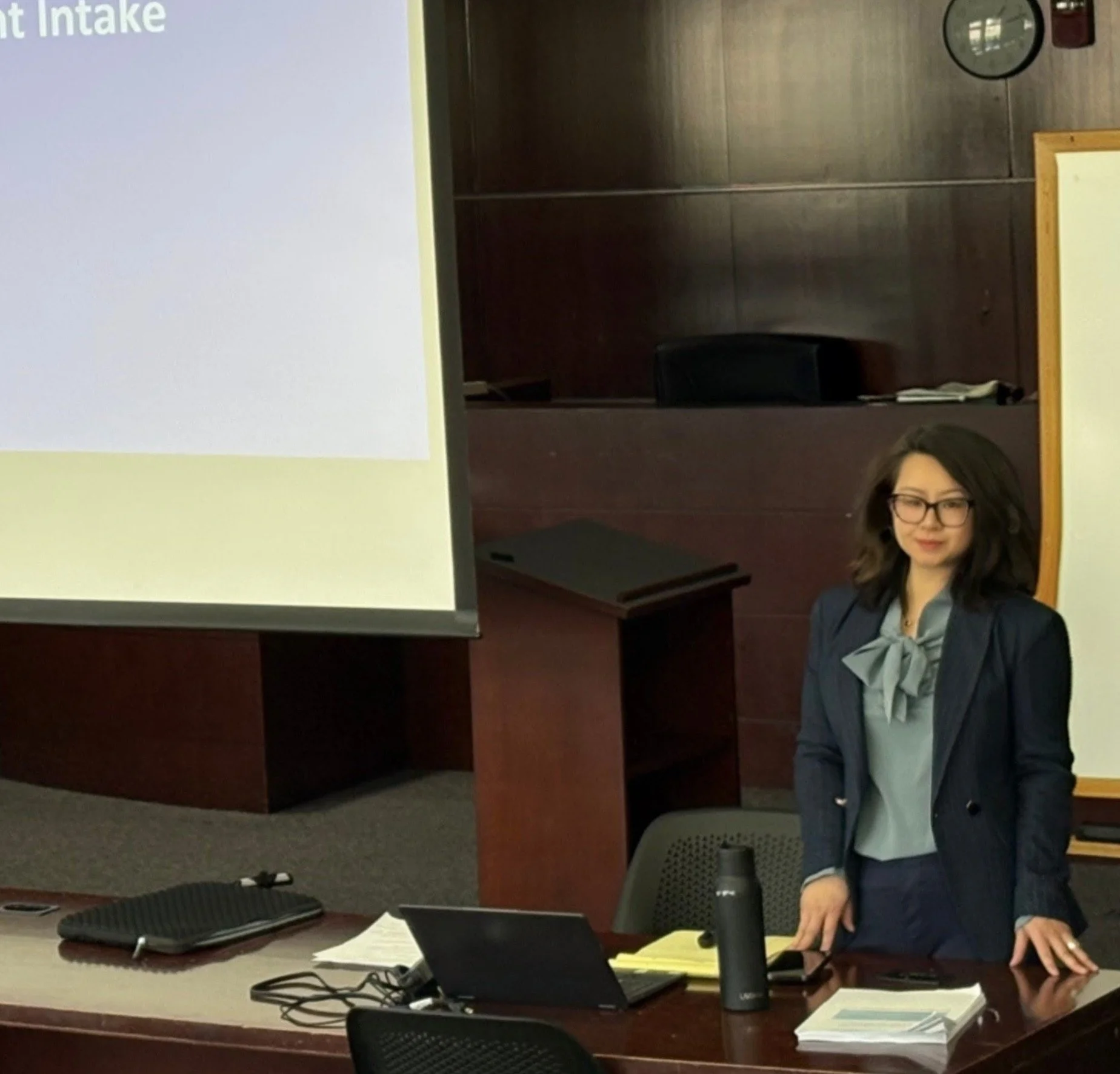
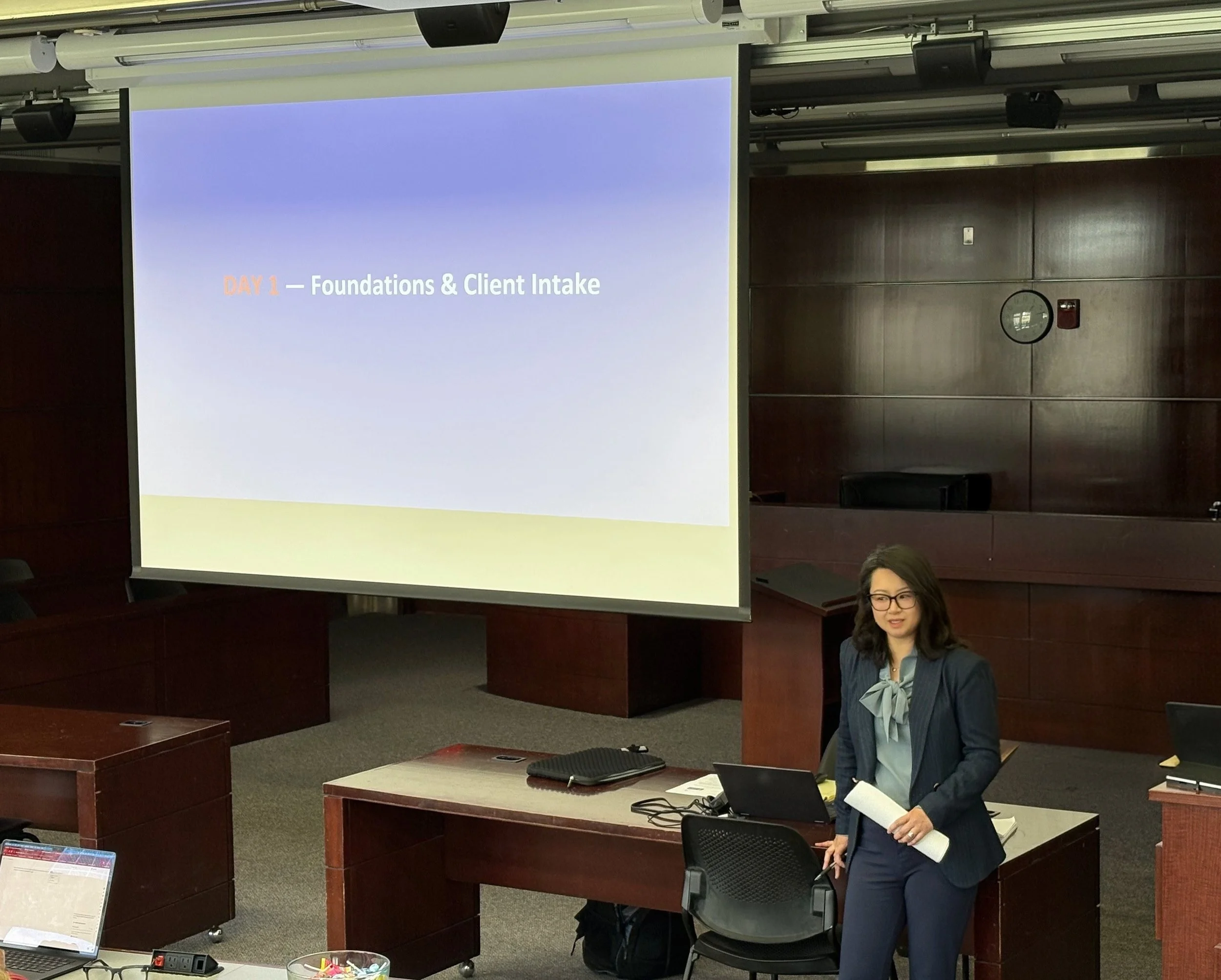
Attorney Lu served as Adjunct Instructor at UW-Madison in April, 2026
She mentioned: “It was a pleasure to spend the week teaching at the University of Wisconsin Law School as an Adjunct Professor. Working with such a talented and thoughtful group of future attorneys was both engaging and rewarding.
I’m grateful for the opportunity to give back and to be part of their journey as they prepare to enter the legal profession.“

Attorney Lucy Lu Attends 2024 Annual Wisconsin Solo/Small Firm General Practice Conference
Lucy Lu recently attended the 2024 Annual Wisconsin Solo/Small Firm General Practice Conference in The Wisconsin Dells, an event aimed at small and solo law firms.

Navigating the Visa Bulletin
The Visa Bulletin is a monthly publication by the U.S. Department of State that provides information on visa availability and cut-off dates. The Lu Law Office is available to assist you in navigating the entire process.

Attorney Lucy Lu was invited to give talks on immigration issues to various organizations this year
Lucy was giving presentations/talks to fellow attorneys at the WI state bar and Winnebago Bar Association on immigration law, she was also invited to speak to many members at the Wisconsin Commerce Chamber of Chinese Americans. (2023-2024)

